What does biomarker-led health support mean?
Biomarkers are things we can measure in your body, such as blood sugar or cholesterol. They can help guide choices about food, training, and supplements. They make the most sense when we also know how you feel and how you live.
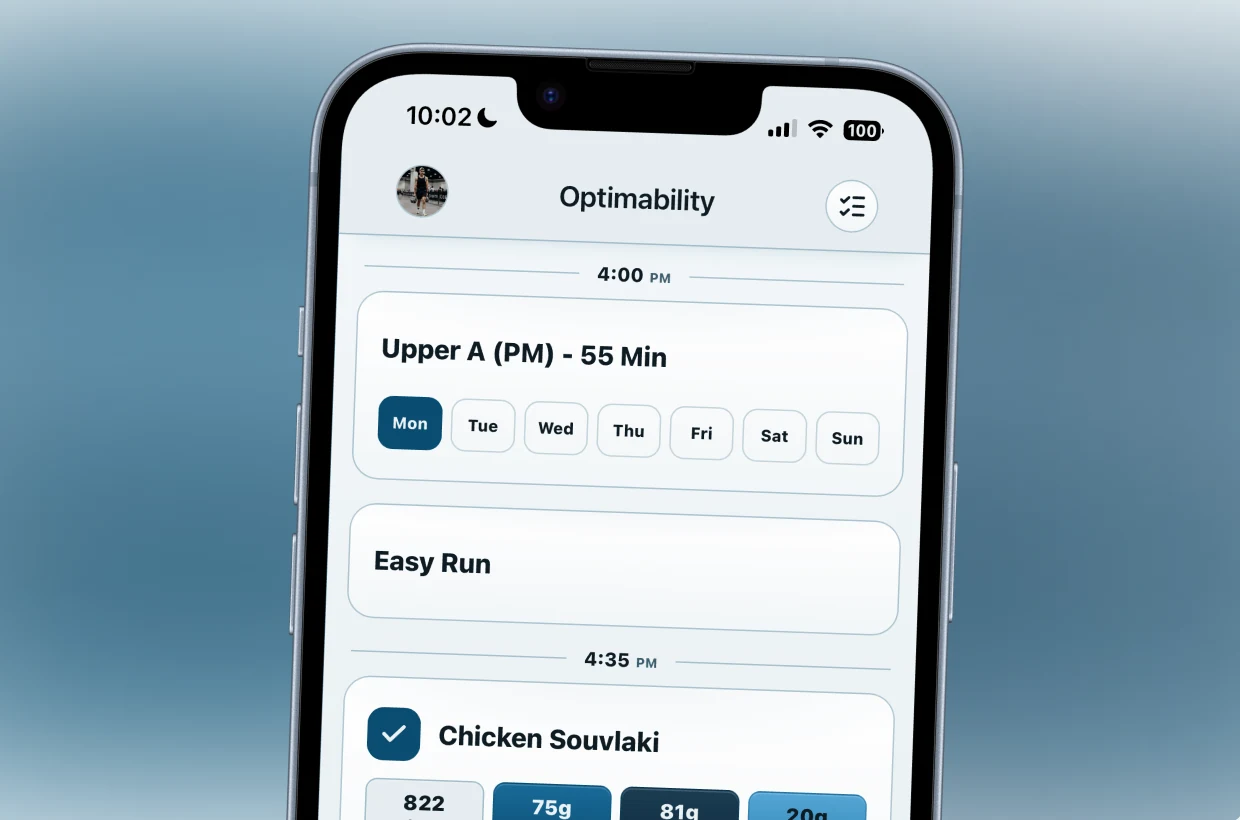
At Optimability, we bring test results into one plan for your week. That means meals you can get ready, workouts that fit your schedule, and supplements with a clear purpose. We review the plan as your needs change.
A result cannot tell the whole story. Poor sleep, missed meals, stress, and illness can share symptoms. We do not use one number to explain every problem or promise that a plan will fix it.
Start with a useful baseline
Before we change the plan, we need to know what is happening now. We review your goals, health history, medicines, current supplements, and any recent tests. We also ask about food, pain, sleep, and what a normal workday looks like.
Testing should answer a question. Blood work may reveal a finding that needs a doctor’s review. A fitness test may help set a training pace. A wearable can show a sleep trend. These tools have different jobs, and none replaces a proper medical assessment.
| What we look at | What it helps us discuss |
|---|---|
| Blood results and health history | Which findings need clinical care or a closer look at the current plan. |
| Food and supplement records | What you already take, what you tend to eat, and what you skip. |
| Fitness tests and training history | Where to start and how to track progress. |
| Sleep trends and your own feedback | Whether the week leaves enough room to recover. |
| Work, travel, and home life | What you can repeat when your schedule gets busy. |
What would you like help with?
From a result to a workable meal plan
- Bring to review
- Recent lab results, a few days of meals, your food preferences, and any clinical advice.
- Decide together
- Agree on the food changes, portions, and meal prep that fit the goal. Decide who will help with shopping or cooking.
- Check again
- Check whether you can follow the meals, how you feel, and whether any finding needs medical follow-up.
This explains the planning process. It does not interpret your labs or prescribe treatment.
Turn the plan into food
A food plan has to work in your kitchen. We use your needs, preferences, and clinical guidance to plan meals you will want to eat. We also look at when you train, how much time you have, and who does the cooking.
For Sam Zia, blood work helped us spot concerns in his metabolic and lipid markers. Those markers relate to how the body uses fuel and the fats carried in the blood. We used the findings to adjust his food and supplement plan.
Sam also needed help getting meals into long workdays. Chef support meant food was prepared and ready when he stepped away from his desk. His story shows why the food plan and the work of preparing it need to fit together. It does not prove that any one change caused all of his results.
Set training you can recover from
Blood work does not choose your sets, reps, or running pace. Your goals, fitness, pain, training history, and recovery matter too. We use that wider picture to build the week.
A coach may shorten a session after a poor night’s sleep or move a hard workout away from a long flight. One low wearable score does not make that choice for you. We look at the trend and ask how you feel.
For endurance work, fitness tests can help us set the effort. VO₂ max describes how much oxygen you can use at your limit. Lactate thresholds help explain which efforts you can hold. They answer different questions.
Give each supplement a reason
We review what you eat and already take before adding anything. Each supplement should have a purpose, a dose agreed with the right professional, and a time to review it. More products can mean more cost and more chances for a problem.
Supplements can interact with medicines. Some can affect lab tests or cause harm at high doses. Share the full list with your clinician, including products bought online. Do not use a blog or a single lab result to choose a dose or stop a prescribed medicine.
At review, we ask whether the supplement is still needed, whether you tolerate it, and whether follow-up testing would help. If the reason for taking it has changed, the plan should change too.
See how the plan changes with the week
The goal may stay the same while the steps change. A meal that works at home may be hard to find on a trip. A training session may need to move when work runs late.
Explore the examples below. These are sample planning choices, not personal medical advice or stories about a specific client.
What changes when life gets busy?
Protect meals and sleep first
- The situation
- Meetings run late and the planned workout no longer fits.
- A possible change
- Move or shorten the session. Have a prepared dinner ready so eating does not become another task.
- What to check
- Can you keep the change without losing more sleep?
Illustrative planning examples. Your own plan depends on your health needs and agreed service.
Check whether the changes are helping
We track how you feel as well as the numbers. Can you follow the meals? Are you recovering from training? Is the routine easier to keep on a busy day? These questions help us see where to adjust.
Repeat tests can add useful detail when there is a clear reason to order them. A change in one marker does not prove the whole plan worked. We look at the full picture and bring medical concerns back to the clinician.
- Choose a few clear goals before making changes.
- Agree on what to track and when to review it.
- Record changes to food, training, medicines, or supplements.
- Review symptoms that persist, even when a report looks normal.
Common questions
They can help guide decisions, but they do not produce a perfect menu. Your health history, food preferences, training, budget, and daily routine also matter.
Not always. Share the date, results, and reason for the tests. The team can review what is useful and discuss gaps with the right clinician before ordering more.
No. A wearable adds context. A coach should also consider your symptoms, recent sessions, sleep, and goals before changing training.
Optimability’s founders are coaches, not physicians. We help organize and carry out health routines. Qualified clinicians handle medical findings, diagnosis, and treatment.
It can suit people who want help putting a plan into practice, especially when work or travel makes that hard. If you already manage your routine well, you may need less hands-on support.