
What is VO₂ max?
VO₂ max is the most oxygen your body can use per minute during hard exercise. Your lungs bring oxygen in. Your heart and blood carry it to the muscles, which use it to help make energy.
It is one measure of aerobic fitness: your ability to keep working during activities such as running, cycling, and swimming. A higher score can support a faster pace, but skill, training, and the effort you can hold also matter.
The American Heart Association treats aerobic fitness as an important health marker. Lower fitness is linked with higher risk of heart disease and early death. One score cannot diagnose a health problem or predict how long you will live.
Every step contributes to your VO₂ max.
- 01 · Lungs
Bring oxygen in
Air moves through the airways into tiny air sacs.
- 02 · Air sacs
Pass oxygen to blood
Oxygen crosses into nearby blood vessels and binds to hemoglobin.
- 03 · Heart
Move blood to muscle
The heart pumps oxygen-rich blood around the body.
- 04 · Muscle
Use oxygen for energy
Mitochondria use oxygen to help make ATP, the cell’s usable energy.
What do the units mean?
Most watches show VO₂ max in mL/kg/min. That means millilitres of oxygen per kilogram of body weight per minute. It lets us compare people of different sizes, though it is not a perfect measure.
A lab may also show L/min, or litres per minute. This is the total amount of oxygen used, without dividing by body weight.
The difference matters when weight changes. Your mL/kg/min score can rise if you lose weight, even if the total oxygen you use stays the same. Keep that in mind when you compare old and new results.
How is VO₂ max measured?
In a lab test, you wear a mask while running or cycling at a rising effort. The test measures the gases you breathe in and out. It is called a cardiopulmonary exercise test, or CPET.
A field test uses a set task, such as a timed run, to estimate a score. A watch uses data such as pace and heart rate. Both can be useful, but they are estimates.
Use the same method to track progress. A watch number after a hot, hilly run is hard to compare with a lab result. Even with the same device, weather, fatigue, and sensor errors can affect what you see.
What kind of number do you have?
Laboratory CPET
- How it works
- Breathing gases are measured as workload rises.
- Best use
- Strongest choice when an accurate value or clinical exercise response matters.
- What can move it
- Cost, access, test protocol, and the need for maximal effort.
What is a good VO₂ max?
A useful comparison matches your age, sex, and test method. A score that is high for one group may be closer to average for another. Treadmill and bike results also need different reference tables.
The tool below uses the FRIEND study’s measured treadmill results. A percentile shows where a score sits in that group. The 50th percentile is the middle: about half the group scored above it and half below.
Use the result as context for a conversation with your coach or clinician. A watch estimate should not be graded as if it were a lab test. Your own trend, measured in the same way over time, is often more useful than one ranking.
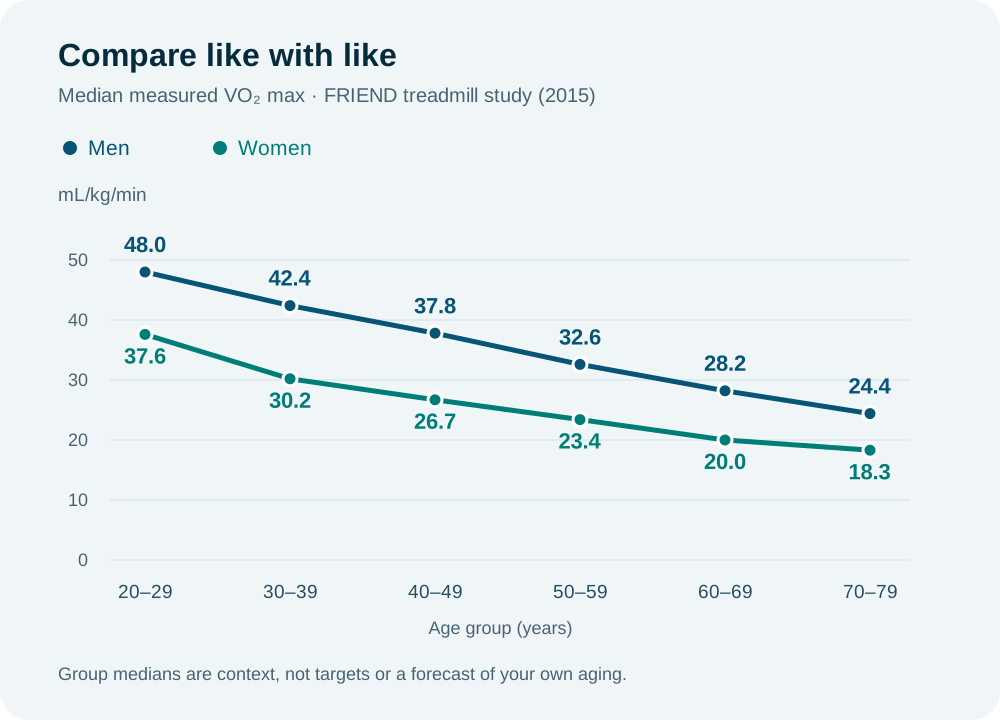
Put a measured score in context
Approximation from the 2015 FRIEND treadmill CPET reference table for adults without known cardiovascular disease. It is not a diagnosis, and it should not be used for cycle or wearable results.
Where should you start?
Start with the week you can repeat. If you rarely do cardio, regular walks, rides, or easy runs may be the first step. An experienced runner may need a change in training load or more recovery.
A low score does not tell you what caused it. The questions below help you think about your routine. They do not screen for disease or tell you whether hard exercise is safe.
Where should you start?
A planning prompt for generally healthy adults, not a validated screening tool.
Build a week you can recover from
Use easy sessions to build a routine before adding hard work. At a moderate effort, you can talk but not sing. During vigorous work, you can only say a few words before taking a breath.
If you already train regularly and recover well, try one interval session in place of an existing hard workout. Keep easy days between hard sessions. Do not add every workout below to the same week.
Heart rate zones can help you judge effort. Energy systems explain how your body fuels it. Use both to understand the session rather than chase a watch score on every run.
Workouts to build VO₂ max
Steady aerobic exercise and intervals can both improve fitness. There is no single best session for everyone. Choose an activity you can do without pain, such as cycling, running, or brisk uphill walking.
For the hard sessions, warm up at an easy pace for about 10 minutes. Aim for a hard but controlled effort, not an all-out sprint. Finish with 5–10 easy minutes. Rest or train easily the next day, and allow more recovery if you need it.
These are examples for generally healthy adults. If you have a heart condition or another health concern, ask a clinician before starting hard exercise. Stop if you get chest pain, dizziness, or unusual shortness of breath, and seek medical help.
Pick one session for the job
01Aerobic baseStart here
Walk, ride, or jog at a pace where you can talk in full sentences. Add time gradually. You should finish feeling able to do more.
024 × 3 minutesRegular exerciser
Use a pace you can hold for all four repeats. During each rest, keep moving slowly. Finish the last repeat at about the same pace as the first.
034 × 4 minutesExperienced
Keep the effort hard but steady. You should only manage a few words at a time. Start under control so you can finish all four repeats.
0430/30 intervalsExperienced
Recover for 4 minutes between sets. Stop when pace or power drops sharply.
Choose one hard session, not all three. Warm up and cool down as described above. Keep easy or rest days between hard workouts.
How long does improvement take?
Think in weeks and months, not single workouts. How much you improve depends on where you start, your training, health, and recovery. No plan can promise the same gain for everyone.
Use the timeline below to plan a review over 12 weeks. Look at more than VO₂ max. Can you move faster at the same effort? Does a climb feel easier? Can you repeat hard efforts with less drop in pace?
For a retest, use the same method and similar conditions. Record changes in body weight too. If training feels easier but your watch score stays flat, do not assume the work has failed.
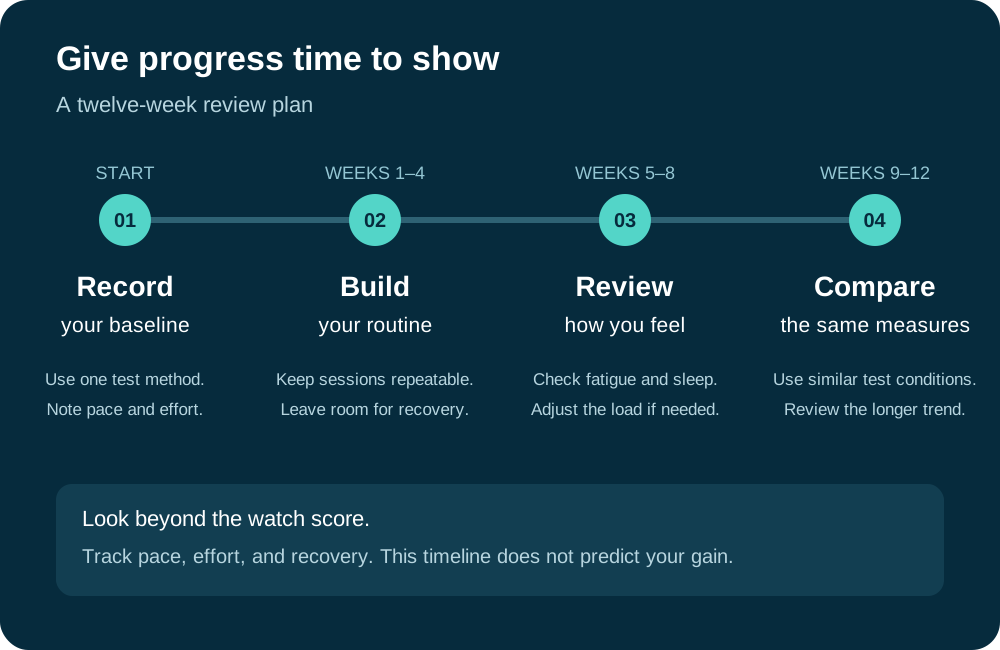
What to watch as training builds
Choose one measurement method and record a repeatable workout, pace, power, and recovery.
This timeline organizes decisions. It does not predict how much your VO₂ max will change.
VO₂ max questions
It is an estimate. It can help you track a trend with the same device, but it is not the same as a lab test. Heat, terrain, fatigue, and sensor quality can affect the number.
It can, especially if you are starting from a low level of fitness. The walk needs to be enough of a challenge for you. A trained runner may need a greater effort to improve.
No. Regular aerobic work can improve fitness too. Intervals are one option when you have a steady routine and can recover from harder exercise.
Yes. The common mL/kg/min score divides oxygen use by body weight. If weight falls, the score can rise even when total oxygen use changes little. It does not mean weight loss is the right training goal for everyone.
No. VO₂ max is the most oxygen you can use during hard exercise. Lactate thresholds describe changes in your response as effort rises. They help guide training intensity, but are not the same measurement.
Watch the longer trend rather than daily changes. For a lab retest, agree on timing with your coach or clinician. Test when the result could change your plan.