What happens after the results arrive?
You open a lab report. There are numbers, a few flags, and perhaps a plan to eat better, exercise more, or take a supplement. Then Monday arrives. You still have to choose lunch, fit in training, and work out which parts of the plan matter most.
Testing can help you choose a direction. Progress also needs a plan you can follow, a way to notice what changes, and someone to review it with you. At Optimability, we connect those steps so the work continues after the consultation.
Static tests give us information at set points. Ongoing tracking adds patterns between those points. Together, they can help answer a practical question: is the plan working for you?
Your body works as a whole
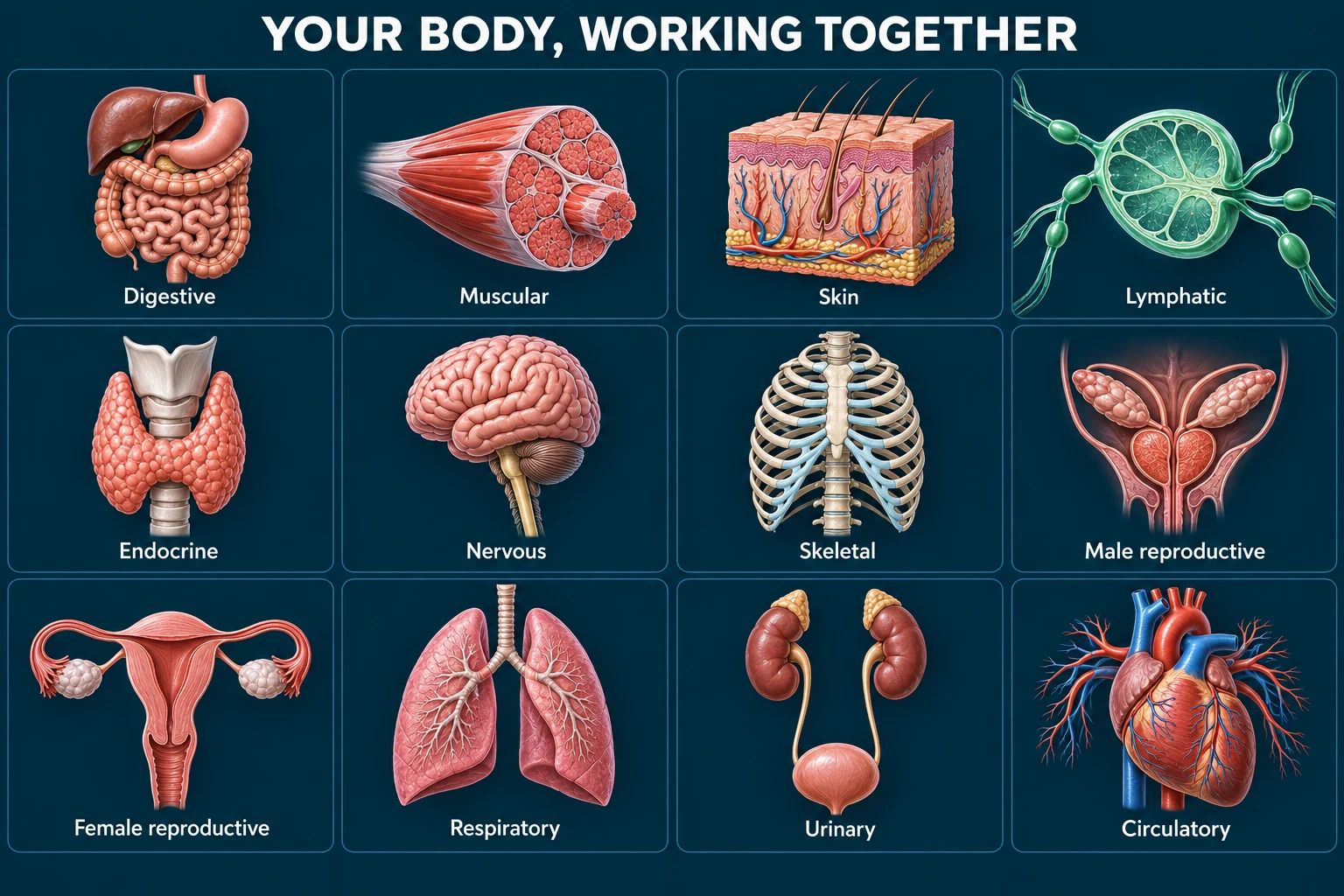
Your cells form tissues, organs, and systems that depend on each other. During a run, your lungs take in oxygen, your heart moves blood, and your muscles use that supply to keep you moving. Your nervous system helps control the whole task.
The visual above shows 12 views, with male and female reproductive anatomy shown separately. Most anatomy texts group these into 11 organ systems. The separate views help us see the parts; the body does not operate in separate boxes.
No single blood panel measures all of them. Selected tests can offer clues about blood cells, kidney and liver function, glucose, blood fats, or hormones. The right tests depend on your symptoms, history, and the question you need answered.
Static, ongoing, and dynamic testing
These labels describe when and how we gather data. More frequent readings are useful for some questions, but they do not make a test better for every purpose. A watch cannot replace a blood test, and a blood test cannot show every change during a workout.
| Test or tool | What it can show | What to keep in mind |
|---|---|---|
| Blood work: a scheduled sample | Selected markers, such as blood-cell counts, cholesterol, or glucose. | The time window varies. A1C reflects average glucose over roughly three months, even though the blood draw takes minutes. |
| DEXA: a scheduled scan | Bone mineral density; whole-body scans can estimate fat and lean tissue, including regional amounts. | Lean tissue is not the same as muscle strength. Scan type, positioning, and testing conditions matter. |
| CGM: ongoing readings | Glucose patterns across meals, activity, and the night. | It measures glucose in fluid under the skin and estimates blood glucose. Readings can lag, and a rise after food alone is not a diagnosis. |
| Wearable: repeated daily estimates | Heart rate, activity, and estimates of sleep timing or duration, depending on the device. | Fit, movement, and the device's method can affect results. A sleep score alone cannot diagnose a sleep disorder. |
| Respiratory exercise test: a dynamic session | How oxygen use, breathing, and other measures change as exercise gets harder. | It records your response during the test. It is not continuous monitoring of daily life. |
A flagged result needs context
A reference range is a comparison with a defined group, often healthy people tested with that lab's method. It is not a personal performance target. A result outside the range does not always mean disease, and a result inside it does not rule out a problem.
Before changing the plan, review the result with your clinician. Bring your symptoms, medicines, supplements, and earlier results. Note anything unusual around the test, such as illness or a hard training week. Those details help make sense of the numbers.
Daily data adds context, too. A short night beside a demanding workout may help explain how you felt the next day. That pattern can guide a conversation; it does not prove the cause of fatigue or replace an assessment.
Follow one finding into the week
A useful plan names the next action, who will review it, and when. Choose an example below to see how a result can connect to daily life. These are teaching examples, not client outcomes or personal treatment plans.
From a finding to a follow-up
Cholesterol result
- Finding
- A lipid panel has a result that needs review.
- Context
- Your clinician considers earlier results, family history, medicines, and your overall risk. A watch score cannot explain the result.
- Daily action
- Turn the agreed food changes into specific meals and a shopping list. Make space for the activity plan you have discussed.
- Review
- Track whether those meals and sessions are happening. Repeat the relevant labs on the clinician's schedule. Feeling better alone does not confirm a cholesterol change.
No data is collected. These examples explain the process; your own plan needs a review of your health and goals.
What that looks like inside Optimability
We bring test findings and day-to-day information into the same plan. The point is to reduce the work of deciding what to do with them every morning.
Meals are built around your needs and reviewed findings, with macros, shopping lists, and batch-prep steps ready to use. Where a supplement is part of the agreed plan, its dose and timing sit on the meal card. You can check them where you already look for food instructions.
Training lives alongside that plan. Exercise videos, instructions, and logged weights help you pick up the next session without trying to remember last week's numbers. Sleep and routine goals need room in the schedule as well.
When travel, work, or a missed meal changes the day, your Health Architect has the plan and its context. They help adjust the next practical step. Medical findings, medication changes, and treatment decisions still need the right clinician.
Track follow-through as well as results
A plan can look good on paper and still be too hard to use. If you keep missing lunch, adding another supplement will not solve the missing meal. The first review may be about shopping, prep time, or having food available at work.
Use a small set of measures tied to your goal. Keep daily habits separate from slower changes in test results. Review trends under similar conditions where possible, and avoid changing everything after one poor reading.
- Follow-through: which planned meals, workouts, or routines did you manage? What got in the way?
- How you feel: note relevant symptoms, energy, and how well you recover. Persistent or worsening symptoms need medical review.
- Daily patterns: compare useful trends, such as sleep timing or training load, with your own usual pattern.
- Repeat tests: agree with your clinician which findings need checking again and when. Retest timing depends on the marker and the reason for testing.
Make the next week easier to follow
Bring the results and tools you already have. You do not need every test or another device to start making a plan. First, agree on the question you are trying to answer and the action worth taking.
Before you leave a review, know what you will do, how it fits your day, and when you will check back. If a recommendation does not fit your budget, work hours, or food preferences, say so. A plan needs to account for the week you actually have.
Common questions
No. They answer different questions. A wearable can follow heart rate or activity patterns, but it cannot replace laboratory measurements of cholesterol, blood cells, or many other markers.
The sample is taken at one point, but A1C reflects average blood glucose over roughly the previous three months. Different lab markers represent different time windows.
Not everyone needs one. CGMs have an established role in diabetes care. Discuss whether the device would answer a useful question for you before adding more data or expense.
There is no single schedule for every test. Your clinician should base the timing on the finding, your health, any treatment, and how quickly a meaningful change could be expected.
No. First review what the result means. Food, medicines, illness, and testing conditions can all matter. Supplements can help in specific situations, but an abnormal value alone does not choose the product or dose.
We help turn the agreed plan into meals, supplement timing, training instructions, and daily routines. Your Health Architect helps you work through practical barriers and brings changes back into review when needed.