What does barefoot movement mean?
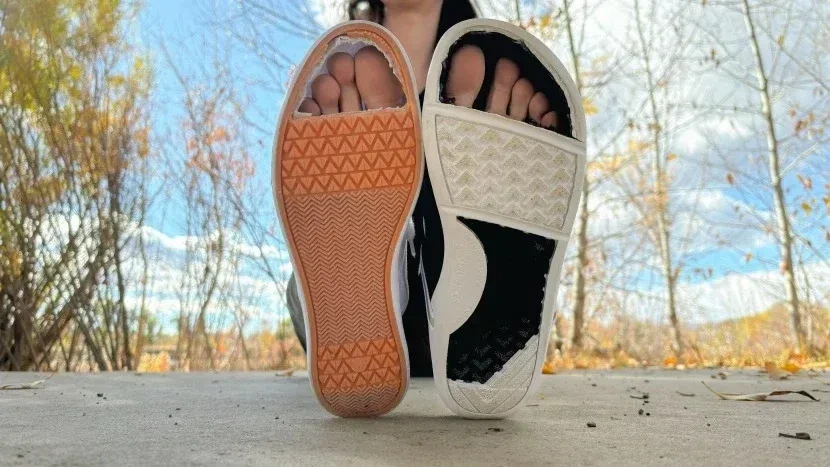
Barefoot movement means spending some time moving without shoes. Minimalist footwear tries to offer some of that freedom with a thin, flexible sole and less structure. Neither choice has to replace every shoe you own.
The useful question is whether your feet could benefit from more strength, movement, or room. For someone who sits at a desk most of the day, a short walk or a few foot exercises may be a more sensible start than changing every workout.
There is evidence that walking in minimal shoes can strengthen parts of the foot. That does not prove barefoot running prevents injuries, fixes posture, or suits everyone. The way you build up the load matters.
Your foot adapts as you move
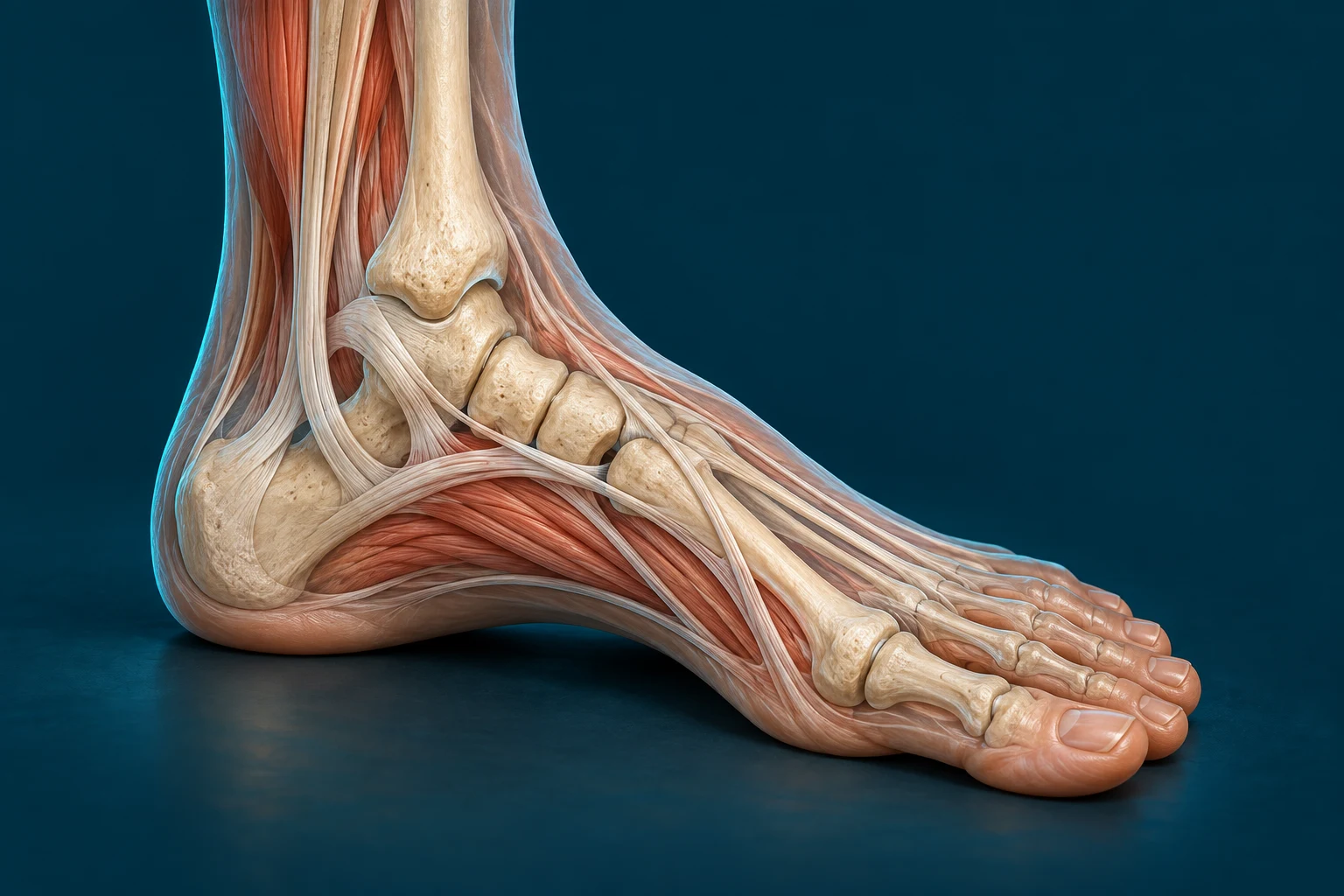
The foot needs to do several jobs. It makes contact with the ground, adapts to the surface, and helps you push off. Bones, joints, muscles, and connective tissue work together to do that.
The arch changes shape under load. Toes help with balance and the final part of a step. Sensory information from the sole also helps you adjust movement. Strength work can train some of these demands without requiring you to run barefoot.
The anatomy explorer below shows the main areas. It is a simplified view, not a way to diagnose pain or choose an orthotic.
A foot built to move and carry load
Arch & midfoot
The arch changes shape under load. Muscles and connective tissue help control that movement and transfer force. A flat-looking arch alone does not tell you whether a foot is healthy.
What does the foot-strength research show?
A 2021 study found that adults who wore minimal shoes for daily activity for six months increased their measured toe-flexion strength by an average of 57.4%. This was a specific strength test, not a 57% improvement in running or overall foot health. Results varied widely.
A separate trial assigned 57 runners to minimal-shoe walking, foot-strength exercises, or a control group. After eight weeks, both active groups improved measures of foot muscle size and strength. The runners kept their running in their usual footwear.
That second finding gives you a useful choice. If you prefer your current shoes, targeted exercises can still be worth doing. Minimal shoes are one tool, not a requirement for strong feet.
Stronger toes. Not proof of fewer injuries.
Average gain in measured toe-flexion strength after daily minimal-footwear use. Individual responses varied widely.
Minimal-shoe walking and foot exercises both improved muscle measures compared with the control group.
Give your feet time to handle the change
A less cushioned shoe changes the demands on your foot and lower leg. Your lungs may be ready for a long run while your feet are still adapting. Swapping shoes does not reset that difference.
In a small ten-week running study, 10 of 19 runners transitioning to minimal shoes developed increased bone-marrow edema on MRI. This was a sign of bone stress, not a report of ten fractures. It is a reason to take the transition seriously.
Keep your usual footwear available. Begin with a small amount of easy walking on a safe surface, then judge the response later that day and the next morning. Change one thing at a time rather than adding distance, speed, and new shoes together.
Let your response set the pace
Start with a small exposure
Try a brief, comfortable walk on a safe surface or practice a few foot exercises. Keep the rest of your walking and training familiar.
Check comfort during the activity, later that day, and the following morning. You should not be limping or pushing through pain.
General education for adults without a current foot problem. Diabetes, poor circulation, reduced sensation, or a recent injury needs individual guidance.
Three ways to practice without changing every shoe
These are general practice ideas, not a rehab prescription. You do not need to make them exhausting. A short session you can repeat without pain is a useful place to start.
Find a steady three-point base
While standing near support, notice contact under your heel, the base of the big toe, and the base of the little toe. Keep the toes relaxed rather than gripping the floor. Practice holding your balance comfortably. Stop if you have pain.
Practice toe control
Sitting or standing, try lifting the big toe while the other toes stay down, then reverse it. Use a small range and do not force it. The goal is controlled movement, not stretching the toes as far apart as possible.
Use a controlled heel raise
Hold a stable support and rise slowly onto the balls of both feet, then lower under control. Start with an amount you can do comfortably and build gradually. A physiotherapist can adapt this if you have foot, ankle, or tendon symptoms.
Choose shoes for the activity and the person
Try shoes on with the socks you use. Your toes should not be crushed together, and the shoe should feel secure rather than sliding around. Fit, comfort, the surface, and the demands of the activity matter more than a barefoot label.
A zero-drop shoe has no height difference between heel and forefoot. That does not mean every zero-drop shoe is thin or flexible. Nor does a wide toe box require a thin sole. You can change one feature at a time.
If you have reduced sensation, diabetes-related foot problems, poor circulation, a current wound, or a recent stress injury, get individual advice before trying barefoot activity. People with diabetes are advised to protect their feet rather than walk barefoot.
At Optimability, foot work belongs in the larger training plan. We account for your current walking and running load, the sports you enjoy, and any advice from your clinician or physio.
Common questions about barefoot training
No. The strength studies discussed here include walking and targeted exercises. Running adds much more load. You can work on foot strength while keeping the shoes that currently suit your running.
Do not expect a shoe to reverse a structural change. Comfort, strength, and symptoms are separate questions. If you have pain, a changing foot shape, or trouble finding suitable footwear, ask a podiatrist or physiotherapist.
There is no reliable timetable for everyone. Your current activity, previous injuries, new shoe, and response all matter. Stay at a tolerable amount before increasing it. A calendar should not push you through symptoms.
Stop the new activity if you develop sharp or localized pain, swelling, numbness, limping, or worsening symptoms. Seek assessment, especially for focal bone pain or trouble bearing weight. Do not treat those signs as normal adaptation.
No. Different shoes serve different needs. The research on minimal footwear does not establish that everyone should give up cushioning, supportive shoes, or prescribed orthotics. Make a change for a clear reason and assess how you respond.